

Scientific breakthroughs rarely arrive like lightning bolts. More often, they emerge from stubborn anomalies that refuse to disappear when careful researchers double-check their work.
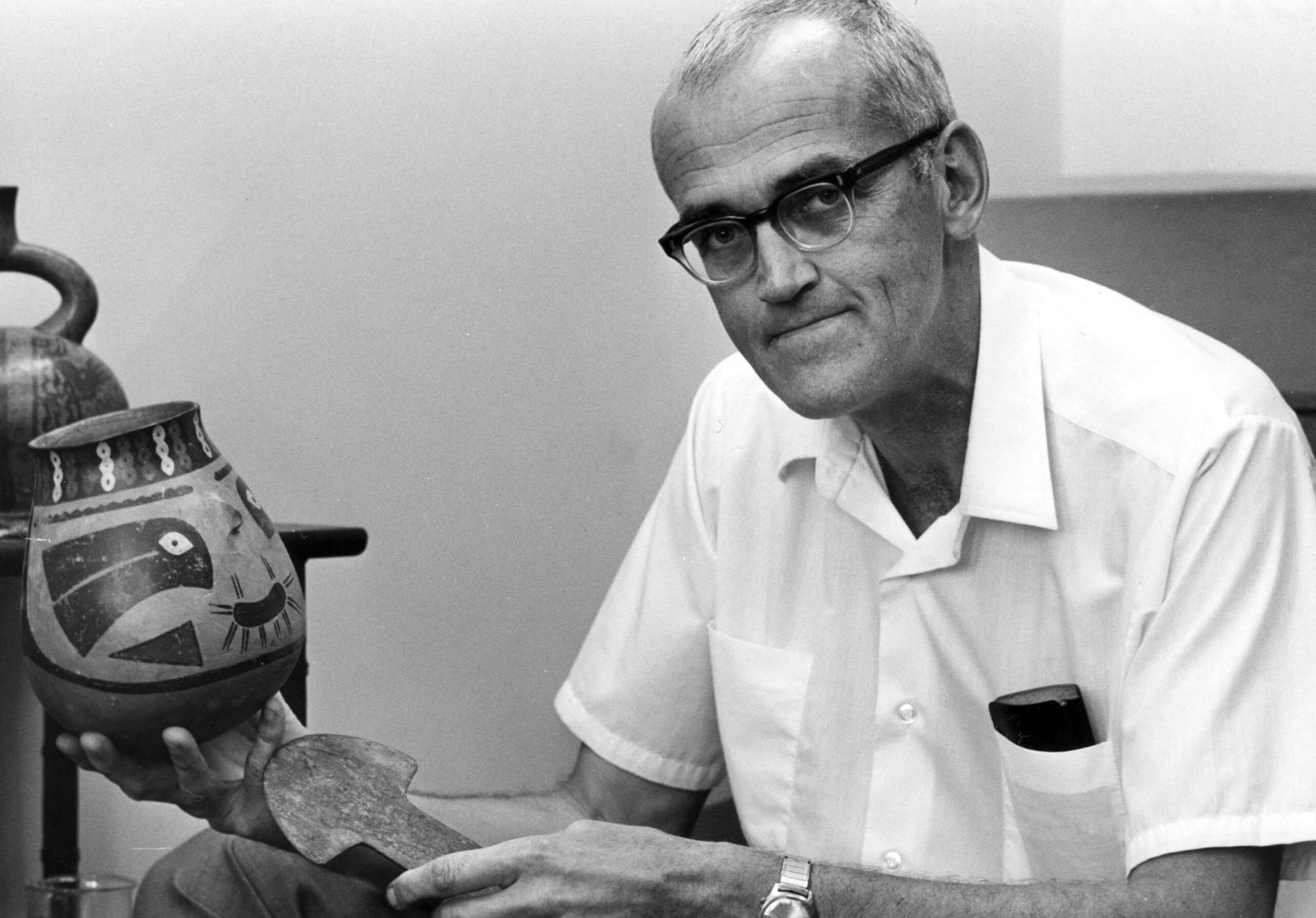
In the late 1940s, an Iowa-born geochemist named Clair Patterson took on an ambitious assignment at the University of Chicago. His goal was straightforward: calculate the precise age of the Earth.
The underlying physics were solid. Uranium decays into lead at a fixed, unvarying rate. If a scientist could measure the ratio of uranium to lead inside ancient meteorites—rocks formed at the birth of our solar system—they could pinpoint the age of our own planet.
Patterson began analyzing meteorite fragments, but his measurements produced impossible results. Every sample he ran contained wildly erratic, inflated amounts of lead.
He suspected his tools were dirty. He scrubbed his glassware in boiling acid, filtered his water multiple times, and sealed his workspace. Still, stray lead kept skewing the data.
Patterson realized the contaminant was not just on his tools. It was drifting through the ventilation shafts, clinging to his clothing, and coating the dust motes in the air.
To solve the puzzle, Patterson had to build an entirely new type of workspace at the California Institute of Technology. He designed pressurized rooms with specialized air filtration and non-reactive plastic surfaces. He pioneered what became the modern clean room.
Inside that sterile sanctuary, he finally succeeded. In 1953, Patterson calculated the Earth’s age at 4.55 billion years, a figure that remains the gold standard of geology today.
Yet that milestone left behind an unsettling mystery. Why was there so much lead in the ambient air of a modern city in the first place?
Industrial leaders and corporate-funded scientists had long insisted that lead was naturally present everywhere. They argued that the traces found in human blood were harmless background exposure. Patterson was skeptical. If lead was natural, why did his clean room have to fight so hard to keep it out?
He decided to measure the past directly. Patterson traveled to Greenland and Antarctica, drilling core samples through ancient glacial ice. Snow layers act as frozen atmospheric records, trapping air from specific years like rings inside a tree trunk.
The ice revealed a startling truth. For thousands of years, atmospheric lead levels were near zero. Then, right around 1923, the concentration spiked dramatically.
The date was not a coincidence. In 1923, standard oil companies began adding tetraethyl lead to commercial gasoline to stop car engines from knocking. For forty years, millions of tailpipes had been spewing aerosolized neurotoxins directly into the air people breathed.
Patterson demonstrated that twentieth-century humans carried lead burdens hundreds of times higher than their pre-industrial ancestors. His discovery turned a tidy geochemical calculation into a public health crisis.
Patterson held his ground against the political and corporate assault. His data eventually forced Congress to pass the Clean Air Act and phase out leaded gasoline, a policy victory that caused lead levels in children’s blood to drop by more than 70 percent in just a few decades.
The lesson of Clair Patterson is clear. Empirical science does not bend to market convenience or political talking points. When modern political movements attack scientific consensus, dismantle regulatory bodies, or dismiss inconvenient research as ideological bias, they follow a familiar, dangerous playbook.
Healthy societies depend on objective data over political comfort. If we abandon rigorous inquiry to protect powerful interests, we poison the very air we breathe.
“L’autorità di mille non vale per un solo che abbia dalla sua la ragione e la verità.”
(The authority of a thousand is not worth that of a single individual who has reason and truth on his side.)~ Galileo Galilei, Le Opere di Galileo Galilei (Edizione Nazionale), Vol. X, Letter to Ludovico Cardi da Cigoli (1612)

Recent Comments